Balancing Commute And Space In Hoke County Homes
May 28, 2026
May 28, 2026
Wondering if you can get more yard, more privacy, and a little more breathing room without making your daily drive feel overwhelming? If you are home shopping in Hoke County, that is usually the tradeoff you are weighing. The good news is that Hoke County often gives you a workable middle ground between space and access, especially if your routine includes Fort Bragg, formerly Fort Liberty. Let’s dive in.
Hoke County sits in a spot that naturally appeals to buyers who want more room than they may find in denser nearby areas. The county has an estimated 56,939 residents spread across 390.15 square miles of land, which works out to about 133.5 people per square mile. That lower-density feel is a big part of why many buyers start their search here.
Local land use also shapes what living in Hoke County feels like. County planning materials describe zoning outside town limits as a way to protect rural and less developed areas. In practical terms, that means you will find a mix of residential-agricultural, low-density residential, manufactured-home, and multi-family districts, with many western and southern areas not intended to urbanize within the current planning horizon.
For buyers connected to the military, location matters even more. Fort Bragg occupies the northern portion of the county and a large share of county acreage, which is one reason commuting patterns and home choices are so closely linked here. If you are relocating, it helps to know that the installation was redesignated Fort Bragg in March 2025, even though many people still search using Fort Liberty.
In Hoke County, space often means more than square footage inside the home. It can also mean a larger lot, fewer nearby houses, and a more rural or semi-rural setting. Depending on where you buy, it may also mean living with private well water, an on-site septic system, and roads built for lower-intensity development.
That matters because your home search needs to match your lifestyle. If you want room for outdoor projects, extra parking, or a little more separation from neighbors, Hoke County may offer options that fit. The county’s land-use plan specifically supports very low-density residential patterns in rural agricultural areas, including site-built, modular, and manufactured homes.
Some areas are also designed to preserve open space through lower-density subdivision patterns. So when buyers say they want “land” or “more room,” Hoke County can deliver that in several forms. It is not just about finding a bigger house. It is about finding the type of setting that works for your daily life.
The biggest mistake buyers make is using one generic countywide commute estimate. If your destination is Fort Bragg, a door-to-gate estimate is far more useful than a broad average. The installation spans 284.5 square miles, and access depends on gates and access points, so your actual drive can vary quite a bit.
One verified example puts the drive from Raeford to Fort Bragg at about 19.5 miles and 30 minutes by car. For comparison, Fayetteville to Fort Liberty is listed at about 10.6 miles and 16 minutes by car. That difference helps explain the tradeoff many Hoke County buyers accept.
Countywide travel times support that same idea. Hoke County’s mean travel time to work is 28.8 minutes, compared with 21.6 minutes in Cumberland County, 26.6 minutes in Moore County, and 25.1 minutes in Scotland County. Hoke is not usually the shortest-commute option, but for many buyers it remains very manageable.
Hoke County is often best understood as a middle-ground market. It is far less dense than Cumberland County, slightly less dense than Moore County, and more dense than Scotland County. That gives you a balance between access and elbow room that can be hard to find in one place.
Home values help tell the same story. Census data show a median owner-occupied home value of $219,300 in Hoke County, compared with $199,200 in Cumberland County, $351,400 in Moore County, and $114,900 in Scotland County. That places Hoke above Cumberland and Scotland, but well below Moore.
The broader housing picture also matters. Hoke County has 21,770 housing units, a 73.0% owner-occupied rate, a median gross rent of $1,089, and 685 building permits issued in 2024. The county’s economic development materials also note a range of housing options, including new construction, historic homes, established neighborhoods, golf communities, and acreage to build on.
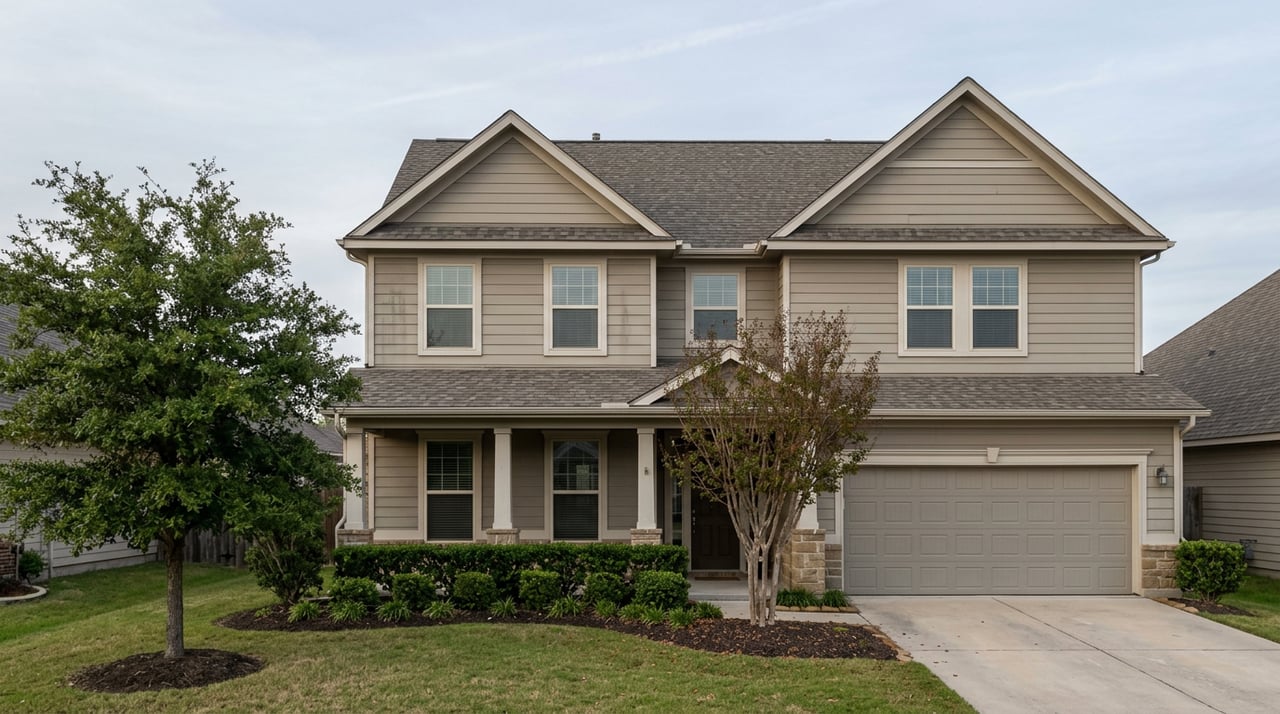
If your goal is more space, it helps to know what kinds of properties are common in Hoke County. The local market includes traditional subdivision homes, homes on acreage, modular homes, and manufactured homes. County planning information specifically notes that manufactured homes are considered single-family residential units and are frequently used by county residents.
That variety can be helpful if you are trying to balance budget, commute, and lot size. Some buyers want a newer home in a more compact setting. Others prefer a property with more land and fewer nearby rooftops.
A simple way to think about the county is by development pattern:
When you are comparing homes in Hoke County, the smartest approach is to filter your search around your daily routine and property needs. That is especially true if you are deciding between a shorter commute and more land. A home that looks perfect online may not feel as practical once you factor in gate access, utilities, and property setup.
Here are some of the most useful filters to start with:
These details matter because Hoke County’s residential review process looks at things like setbacks, easements, flood zones, wetlands, septic systems, and plot plans before development moves forward. If you are buying acreage or considering future improvements, those details can affect both cost and usability.
Acreage can be one of the biggest reasons buyers choose Hoke County, but it also requires more careful review. The county requires a zoning permit before land is used or before a building is erected or altered. Applications must include a scaled plot plan showing lot dimensions, setbacks, rights-of-way, buildings, and driveways.
Environmental Health also reviews septic impacts unless the property is served by public sewer. That means a property with “more space” may also come with more due diligence. If you are buying land or a home on a larger lot, it is smart to verify septic, well, setbacks, easements, and the plot plan early in the process.
This is where a local, detail-focused approach matters. You do not just want a home that looks good on paper. You want one that works for your commute, your utilities, and the way you plan to live.
If you are torn between a shorter drive and a larger property, start with the parts of life you cannot easily change later. Your commute pattern, work schedule, and tolerance for drive time should come first. From there, you can weigh how much lot size, privacy, or flexibility really matters to you.
For some buyers, shaving 10 to 15 minutes off the drive is worth choosing a denser area. For others, the ability to have more yard, a quieter setting, or a different type of home is well worth the extra drive. There is no single right answer, only the right fit for your priorities.
In Hoke County, that fit often comes down to being honest about your daily routine. If you need a workable commute to Fort Bragg and still want more breathing room than many nearby areas offer, Hoke County deserves a close look.
If you are weighing commute, lot size, and housing type in Hoke County, a local strategy can save you time and help you focus on the homes that truly fit your needs. Connect with HIVE Realty Group by LPT Realty for personalized guidance on buying or selling in the Raeford area and surrounding markets.